The Process
Every terrarium begins the same way — with intention, infrastructure, and time.
The Vessel
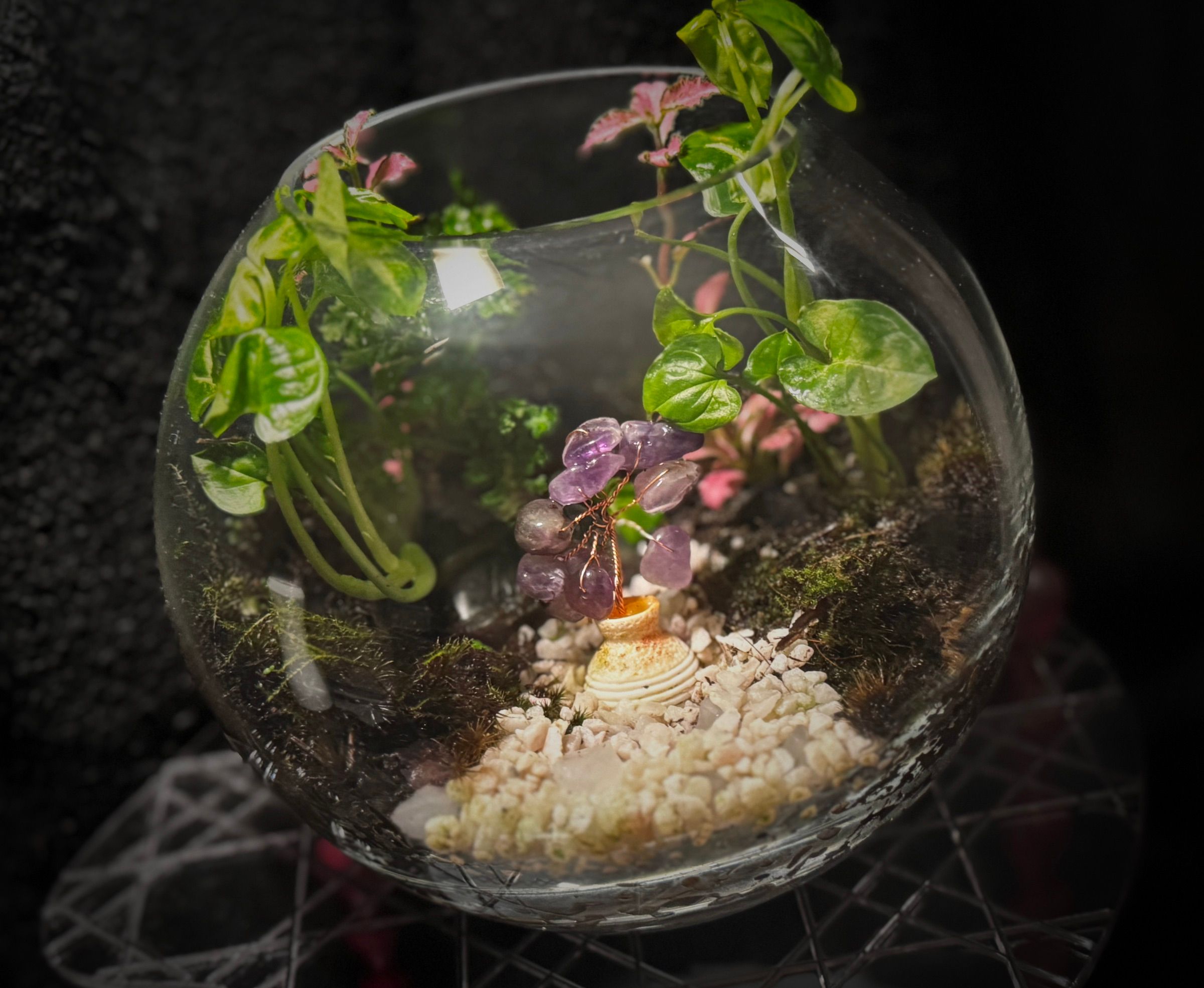
The vessel is not decoration — it defines the light, humidity, and growth pattern of everything inside. Each shape creates a different microclimate, a different relationship between glass and green.
Our collection includes closed and open forms, from compact globes to repurposed teapots. The vessel comes first — everything that follows is built to suit its character.
The Strategy
Strategic Grace — front-loading the infrastructure so the system can manage itself.
The Setup Layers
Top layer. Root establishment zone.
Part of the substrate infrastructure.
Mesh separating earth from water.
Reservoir. River stones and pebbles. Roots stay above; humidity rises from below.
Water flows through soil, through mesh, sits in the stone layer. Roots stay in soil above; humidity rises from the reservoir below. This layered infrastructure is the foundation — deliberate work done upfront so that what you receive requires less from you, not more.
The Planting
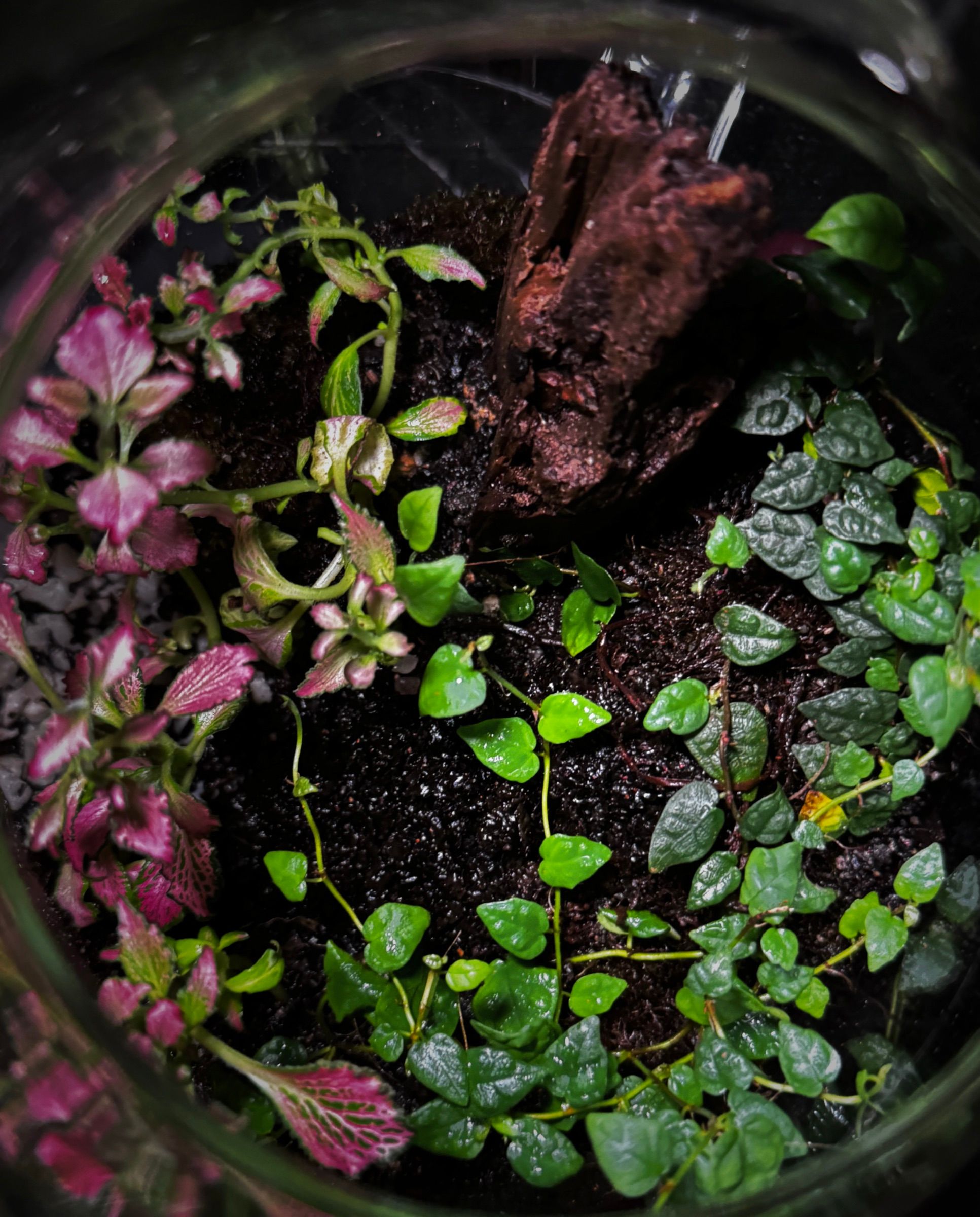
Each terrarium is planted with species selected for their compatibility in a closed, humid environment.
Foundation
Mosses
The living carpet. Mosses anchor the substrate, regulate moisture at the surface.
Accent
Tropicals
Colour and contrast. Compact tropicals thrive in the sealed humid environment.
Structure
Ferns
Height and form. Ferns create vertical interest and layer depth into the composition.
See the full species list in our Care Guide →
The Wait
The terrarium is built, but it is not ready. What follows is the most important part — attentive monitoring where Kirsten watches the condensation patterns, checks root establishment, and ensures the system is self-managing.
A terrarium leaves the studio when it has proven itself stable. Not on a schedule.
Each terrarium passes through every stage before it reaches you.